Why Employees Don’t Use the Spaces Companies Spend the Most Money On
Many modern offices look impressive on paper: breakout areas, collaboration zones, acoustic booths, lounges, hot desks.
But in reality, employees often default to the same behaviours every day:
- taking calls in corridors,
- wearing headphones all day,
- avoiding open collaboration areas,
- booking meeting rooms for solo work,
- or staying remote whenever possible.
The problem usually isn’t the people.
It’s that many workplaces are designed around appearance rather than behaviour.
A productive office isn’t just visually attractive; it supports how people actually work.
1. The “Showroom Office” Problem
Some workplaces are designed to impress visitors rather than support employees.
Large open-plan spaces may look modern, but without acoustic comfort, privacy, or flexibility, they can quickly become mentally exhausting.
Employees naturally adapt:
- they seek quieter corners
- create makeshift focus areas
- or avoid the office entirely for deep work.
The office then becomes a space people tolerate instead of enjoy.
2. One Office Cannot Support Every Task
Modern work includes:
- focused individual work
- online meetings
- collaboration
- brainstorming
- admin tasks
- informal conversations
- learning and training.
Trying to make one environment support all of those equally rarely works.
That’s why the best-performing workplaces create different zones for different energy levels and work styles.
Even small changes can make a major difference:
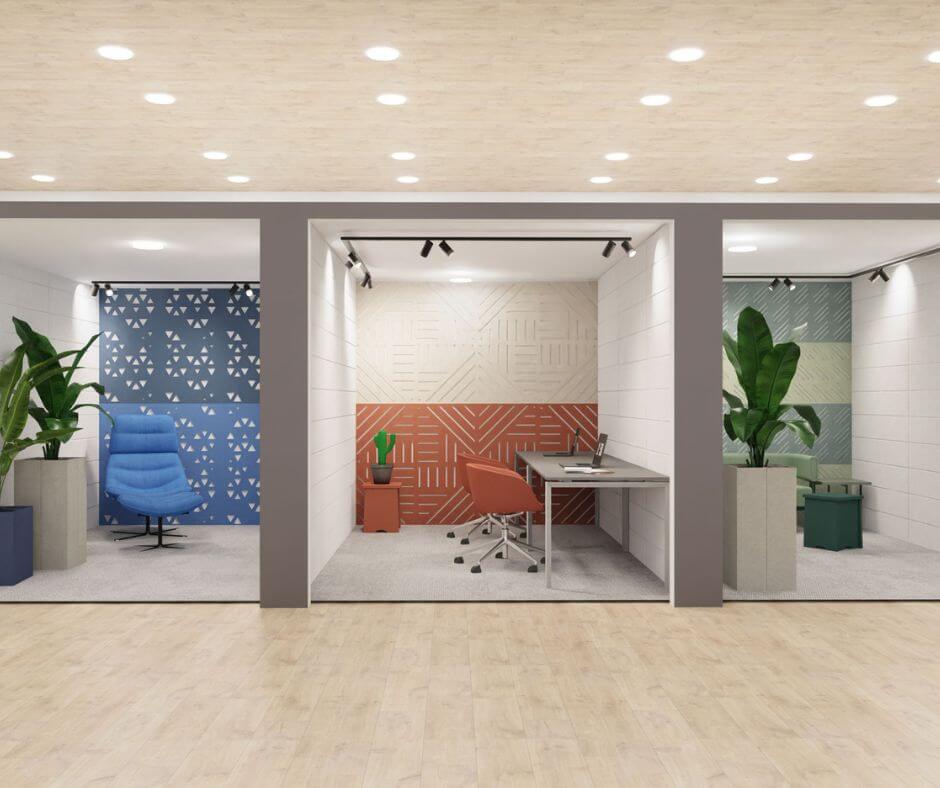
- acoustic panels
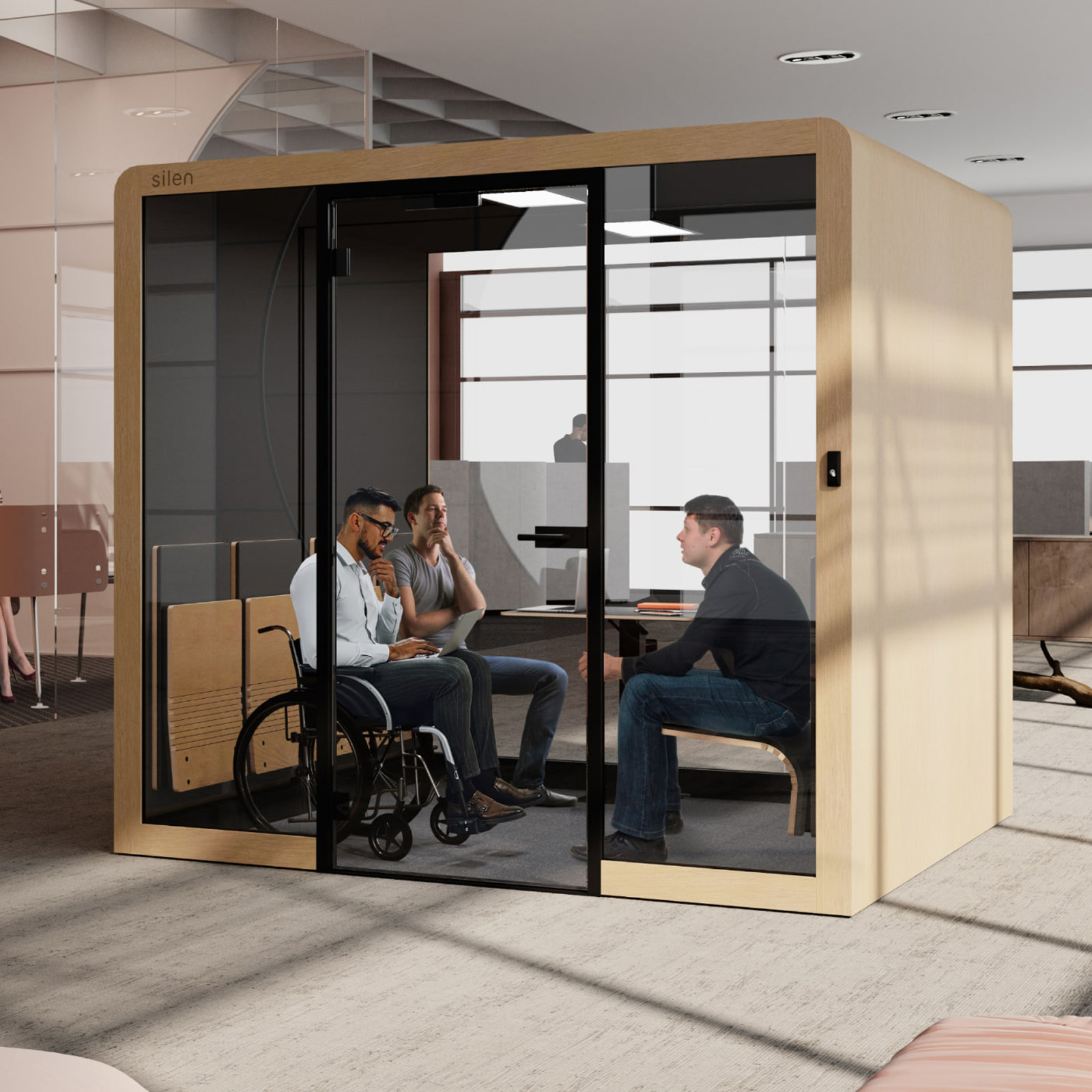
- pods
- soft seating
- semi-private areas
- mobile partitions
- adjustable desks
- better lighting.
3. Comfort Directly Affects Productivity
People notice when:
- chairs are uncomfortable after two hours
- acoustics create fatigue
- lighting feels harsh
- there’s nowhere private to take a call
- meeting rooms feel stressful rather than functional.
Small daily frustrations quietly reduce focus and energy.
A well-designed workspace reduces friction instead of creating it.
4. The Most Effective Offices Feel Natural
The best offices often don’t feel overly “designed.”
They simply feel easy to work in.
Employees naturally move between:
- collaboration
- focus
- meetings
- and breaks without effort.
Good workplace design should support behaviour, not fight against it.
Office design is no longer just about fitting desks into a room.
It’s about creating environments where people can actually perform at their best.
Companies investing in thoughtful workspace design are not just improving aesthetics — they are improving focus, wellbeing, communication, and retention. Sometimes the most valuable workplace improvement isn’t bigger.
It’s smarter.